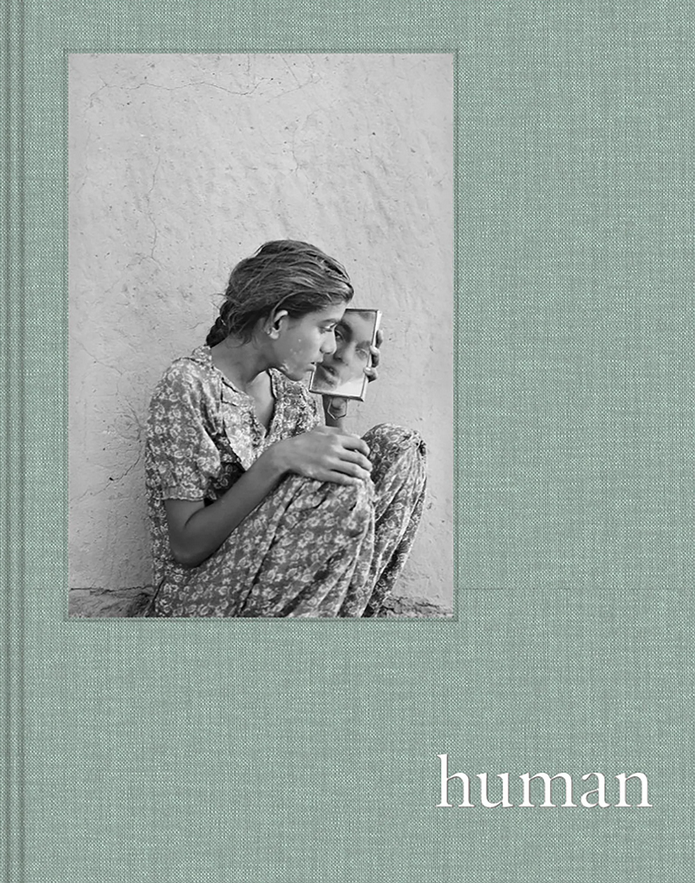
Gauri Gill wins Prix Pictet Human. until 22 October. V&A. London – UK
Indian photographer Gauri Gill was last week announced at a ceremony at the V&A as the winner of Human, the tenth cycle of the Prix Pictet. Gill received the 100,000 Swiss Franc prize after being selected from the shortlist of twelve photographers by Prix Pictet’s independent jury. The work of the twelve outstanding photographers shortlisted for the award is exhibited at the V&A until 22 October. Following its time at the V&A the exhibition will embark on a global tour during which it will be shown at leading museums in Bangkok, Dublin, Istanbul, Munich, Nassau, San Diego, Singapore and Stockholm and Zürich.
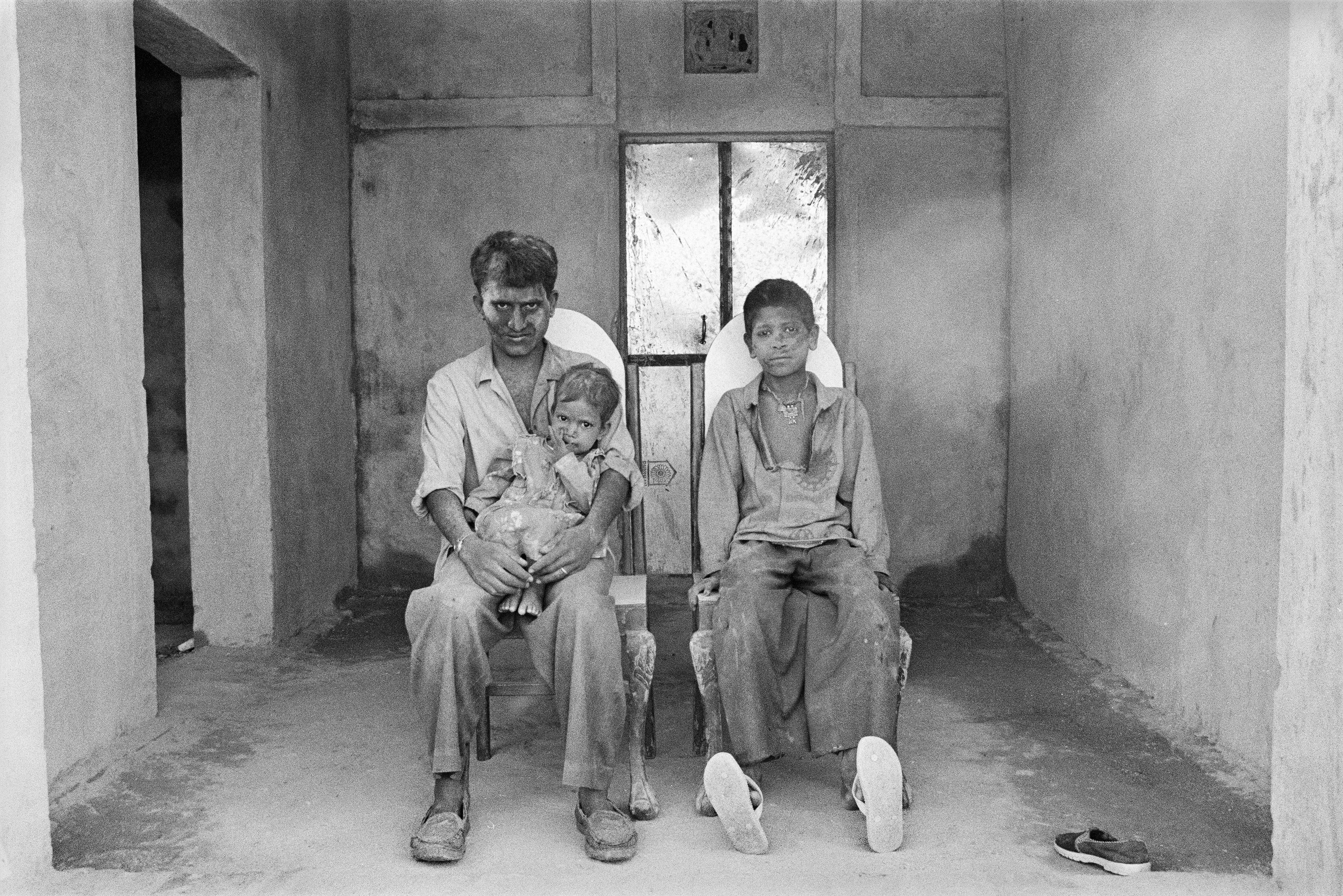
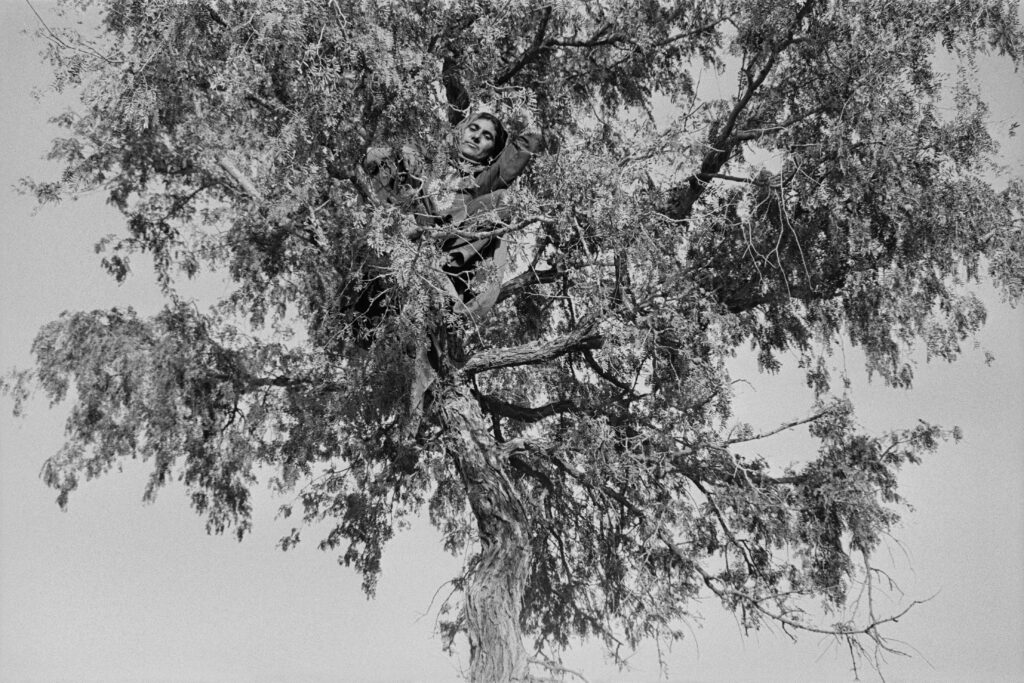
Gill’s work emphasises her belief in working with and through community, in what she calls ‘active listening’. For more than two decades, she has been closely engaged with communities in the desert of western Rajasthan, Northern India and for the last decade with Indigenous artists in Maharashtra. Her winning series Notes from the Desert began in April 1999 when she set out to photograph village schools in Rajasthan. Having grown up mainly in cities, she soon realised that rural schools were a microcosm of a complex reality she knew nothing about. Visiting the same people and places over decades, she witnessed the whole spectrum of life: drought years and great monsoons; dust storms leading to fevers, and floods leading to the rebuilding of homes; epidemics; overwhelmed hospitals and understaffed schools; festivals, feuds, celebrations, and prayers.
The Prix Pictet is widely acknowledged as the world’s leading award for photography and sustainability. It was founded in 2008 by the Pictet Group with the goal of harnessing the power of photography to draw attention to the critical issue of global sustainability. To date, there have been ten cycles of the award, each with its own theme highlighting a particular facet of sustainability.
Gauri Gill (b. 1970, Chandigarh, India) is a Delhi based photographer. She has exhibited within India and internationally. In 2022, her first major survey exhibition opened at the Schirn Kunsthalle, Frankfurt and travelled to the Louisiana Museum of Modern Art, Humlebæk in January 2023. Gill’s work has been shown at the Victoria and Albert Museum, London (2023), BAMPFA, Berkeley (2020), the 58th Venice Biennale (2019), National Gallery of Canada, Ottawa (2019), Chobimela, Dhaka (2019), Chennai Photo Biennale (2021 and 2019), Museum Tinguely, Basel (2018), MoMA PS1, New York (2018), Documenta 14, Athens and Kassel (2017), 7th Moscow Biennale (2017), Prospect 4, New Orleans (2017), Centre Pompidou, Paris (2017), Kochi-Muziris Biennale (2016), San Jose Museum of Art (2015), The Wiener Library, London (2014) and Whitechapel Gallery, London (2010), among other places. She has also consistently exhibited at locations outside of the art world, including public libraries, rural schools and non-profit institutions. Her work is in the collections of prominent institutions worldwide, including the Museum of Modern Art, New York; Tate Museum, London; Smithsonian Institution, Washington and Fotomuseum, Winterthur. In 2022, Gill was the Inaugural Roberta Denning Visiting Artist at Stanford University, California; in 2018, she was a recipient of an India Today Art Award, New Delhi; in 2013 she was Creative Arts Fellow at the Rockefeller Foundation in Bellagio; in 2011 she was awarded the Grange Prize, Canada’s foremost award for photography; and in 2002 she received the Fifty Crows Award (formerly called the Mother Jones) in San Francisco. Gill’s practice is complex because it contains several lines of pursuit. These include a more than two decade long engagement with marginalised communities in rural Rajasthan called Notes from the Desert (since 1999)—this ongoing archive contains sub-series such as The Mark on the Wall, Traces, Birth Series, Jannat, Balika Mela, and Ruined Rainbow. She has explored human displacement and the migrant experience in The Americans and What Remains. Projects such as the 1984 notebooks highlight her sustained belief in collaboration and ‘active listening’, and in using photography as a memory practice. Beginning in early 2013, Fields of Sight is an equal collaboration with the renowned Adivasi artist, Rajesh Vangad, combining the contemporary language of photography with the ancient one of Warli drawing to co-create new narratives. In her recent body of work, Acts of Appearance, (2015—), the artist has worked closely with the paper mache artists of the Kokna and Warli tribes in Maharashtra, using unique new masks to tell fictional stories improvised together of contemporary life in the village. Working in both black and white and colour, Gill addresses the Indian identity markers of caste, class and community as determinants of mobility and social behaviour; in her work there is empathy, surprise, and a human concern over issues of survival. Gill has recently published two books with Edition Patrick Frey about her collaborations with rural artists, Acts of Appearance (2022) and Fields of Sight (2023).