Louise Bourgeois. Rare Language. 25 giugno – 31 ottobre 2024. Studio Trisorio, Napoli – Italia
La retrospettiva di Louise Bourgeois Rare Language è una delle tappe dell’itinerario italiano che rende omaggio a una delle più influenti artiste contemporanee, coinvolgendo insieme allo Studio Trisorio prestigiose sedi museali quali la Galleria Borghese e Villa Medici a Roma, il Museo Novecento e il Museo degli Innocenti a Firenze.
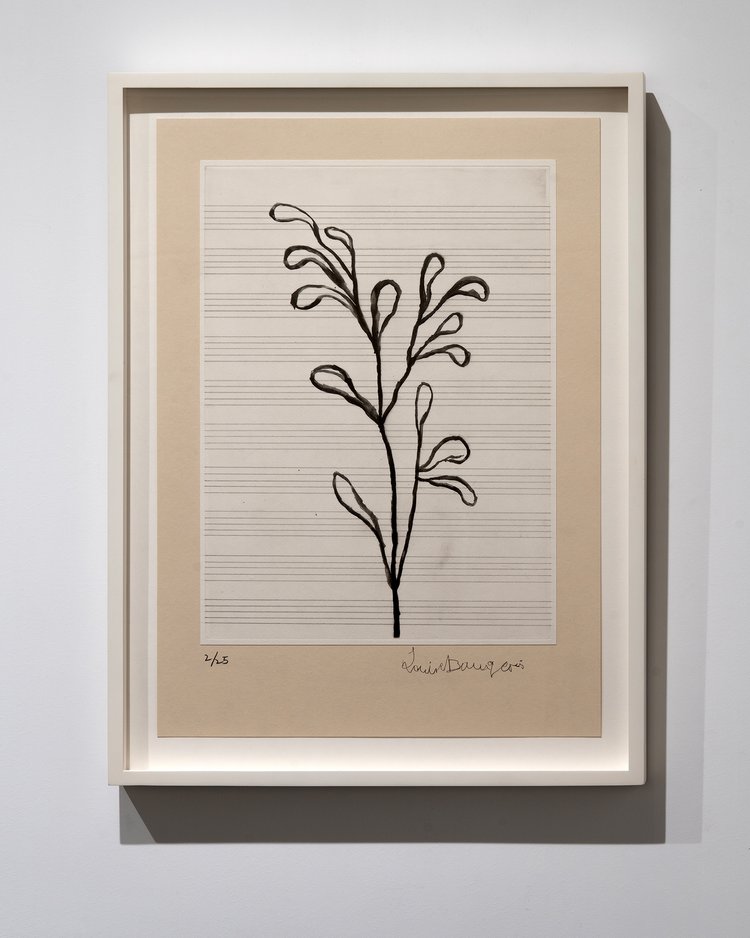
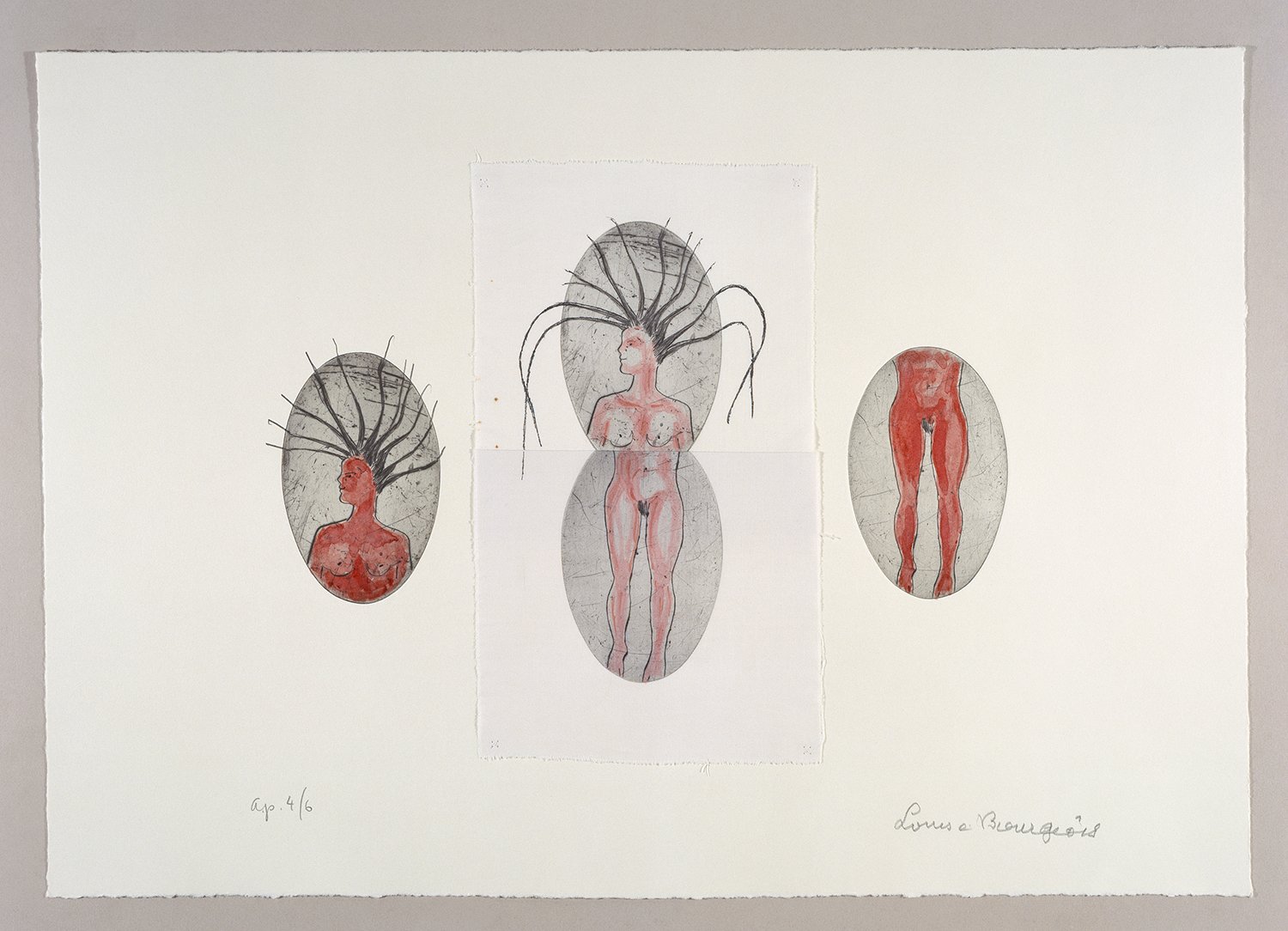
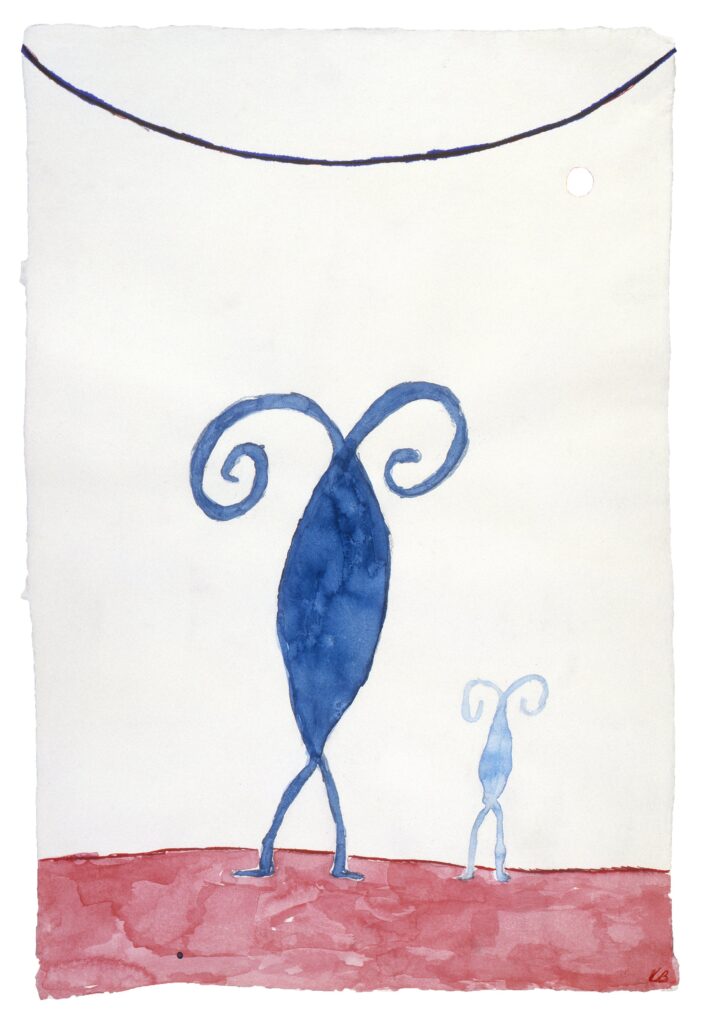
Presso lo Studio Trisorio saranno in mostra 35 disegni realizzati dall’artista fra il 1947 e il 2008 e 4 sculture in bronzo che testimoniano la sua poetica in un ampio arco cronologico.
L’arte di Louise Bourgeois è permeata di memorie autobiografiche che interessano tutti gli aspetti della sua vita, in particolare l’infanzia trascorsa a Parigi e il rapporto con sua madre e suo padre sono rimasti una fonte d’ispirazione profonda perché, come l’artista stessa ha dichiarato, non hanno mai perso il loro mistero, la loro magia e il loro dramma. Nelle opere di Louise la pratica del disegno sembra accompagnare quella della scrittura che lei ha esercitato per tutta la vita attraverso i suoi diari, tessendo così la trama delle sue memorie più intime. Se i disegni sono spazi creativi dove annotare emozioni e idee, “infilzandole come farfalle”, le sculture sono forme ancora più tangibili, immagini a tre dimensioni realizzate per esorcizzare il passato e le paure inconsce, dominando così il caos interiore. Nascono dai ricordi che riaffiorano nel corpo e che l’artista definisce “semi” delle sue opere.
Geometrie astratte o spiraliformi, rimandi espliciti al corpo femminile e maschile, sono gli elementi ricorrenti del vocabolario artistico della Bourgeois che si fonda sulla necessità dell’immediatezza, per esprimere i suoi stati d’animo, per raccontare la relazione complessa fra l’individuo e ciò che lo circonda.
Born in Paris in 1911, Louise Bourgeois was raised by parents who ran a tapestry restoration business. A gifted student, she also helped out in the workshop by drawing missing elements in the scenes depicted on the tapestries. During this time, her father carried on an affair with Sadie Gordon Richmond, the English tutor who lived in the family house. This deeply troubling—and ultimately defining—betrayal remained a vivid memory for Bourgeois for the rest of her life. Later, she would study mathematics before eventually turning to art. She met Robert Goldwater, an American art historian, in Paris and they married and moved to New York in 1938. The couple raised three sons. Early on, Bourgeois focused on painting and printmaking, turning to sculpture only in the later 1940s. However, by the 1950s and early 1960s, there are gaps in her production as she became immersed in psychoanalysis. Then, in 1964, for an exhibition after a long hiatus, Bourgeois presented strange, organically shaped plaster sculptures that contrasted dramatically with the totemic wood pieces she had exhibited earlier. But alternating between forms, materials, and scale, and veering between figuration and abstraction became a basic part of Bourgeois’s vision, even while she continually probed the same themes: loneliness, jealousy, anger, and fear. Bourgeois’s idiosyncratic approach found few champions in the years when formal issues dominated art world thinking. But by the 1970s and 1980s, the focus had shifted to the examination of various kinds of imagery and content. In 1982, at 70 years old, Bourgeois finally took center stage with a retrospective at The Museum of Modern Art. After that, she was filled with new confidence and forged ahead, creating monumental spiders, eerie room-sized “Cells,” evocative figures often hanging from wires, and a range of fabric works fashioned from her old clothes. All the while she constantly made drawings on paper, day and night, and also returned to printmaking. Art was her tool for coping; it was an exorcism. As she put it, “Art is a guarantee of sanity.” Bourgeois died in New York in 2010, at the age of 98.